Trimble Estimation MEP is a cloud-based software solution for electrical, mechanical, and plumbing (MEP) contractors to create accurate bids and estimates.
Client: Trimble Inc.
Tasks: UX Research, UX Design, AI, Design System, Strategy
Estimation MEP in short
Estimation for Mechanical, Electrical, and Plumbing (MEP) systems is a critical process in construction for several key reasons. It involves determining and analyzing the costs related to these systems, which are among the most complex and expensive components of a building.
The main importance of accurate MEP estimation includes:
- Accurate Budgeting and Cost Control: It helps create realistic and detailed budgets by breaking down expenses for materials, labor, and equipment. This prevents significant cost overruns, financial strain, and helps project managers make informed budgeting decisions.
- Improved Project Efficiency and Timelines: Precise estimates enable better resource allocation, ensuring the right amount of materials and labor are available when needed. This streamlines project workflows, reduces delays, and helps keep the project on schedule for timely completion.
- Risk Mitigation: Accurate estimates help identify potential cost risks, such as fluctuating material prices or unexpected design issues, early in the project. This allows teams to implement mitigation strategies, leading to fewer change orders and a smoother project lifecycle.
- Optimization and Quality: Estimators help balance cost-saving measures with system quality and performance, finding affordable solutions that maintain efficiency and durability. They also ensure that the design, budgeting, and execution comply with strict local building codes and safety standards.
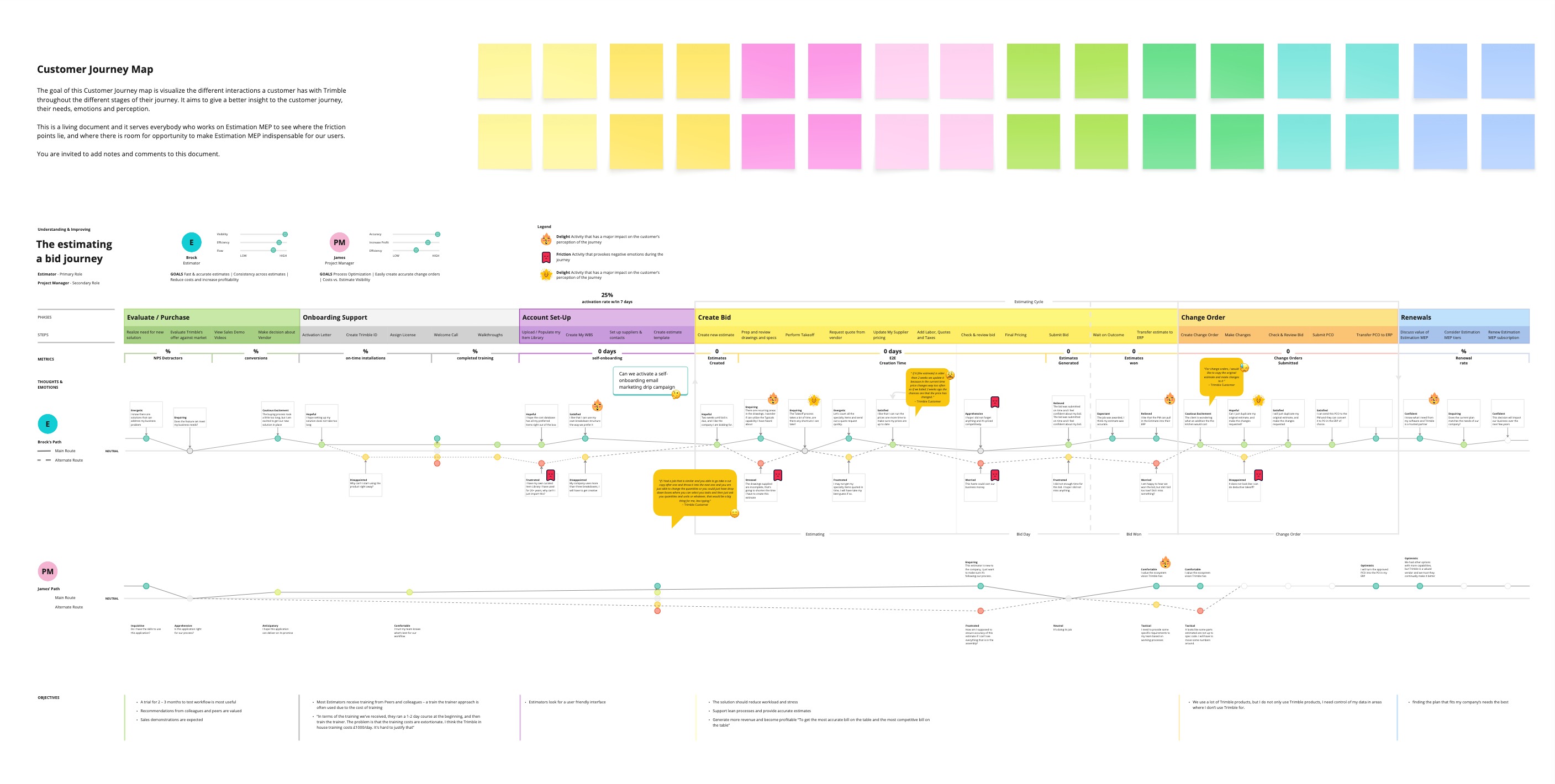
Designations
Designations are a key feature in the estimating workflow. They are used to define and track specific materials and equipment for an estimate, primarily because these items require specialized handling and quoting.
The key reasons for using designations in your estimation process are:
- Handling Project Specifications: Designations are used to separate and label specific fixtures and equipment (like light fixtures and power distribution equipment) that have been specified by engineers or architects in the project documents (drawings). This is essential for commercial and industrial projects, where they are used on almost every estimate.
- Facilitating Custom Quotes: The items added as designations specific fixtures and equipment, almost always need custom quotes. Designations allow you to build an assembly, name it specifically, and then easily match the quantified type to the type needed for the quote.
- Unique Tracking and Quantification: They allow an estimator to take a common assembly (like a 2x4 fixture) and separate it into unique designation types (Type A, Type B, etc.). This ensures you can track the different quantities individually, which is crucial when putting together a bill of material.
- Improved Clarity and Workflow: They provide an explicit Key field for creating and editing a designation, which can be populated by the user and AI detection. The designation's Key and Description are concatenated into the takeoff's item description for clear visibility. This detailed description is helpful during project management to understand the fixture or equipment and to make adjustments to labor units.
For this case study I will focus on the automation of the designations workflow with the help of AI.
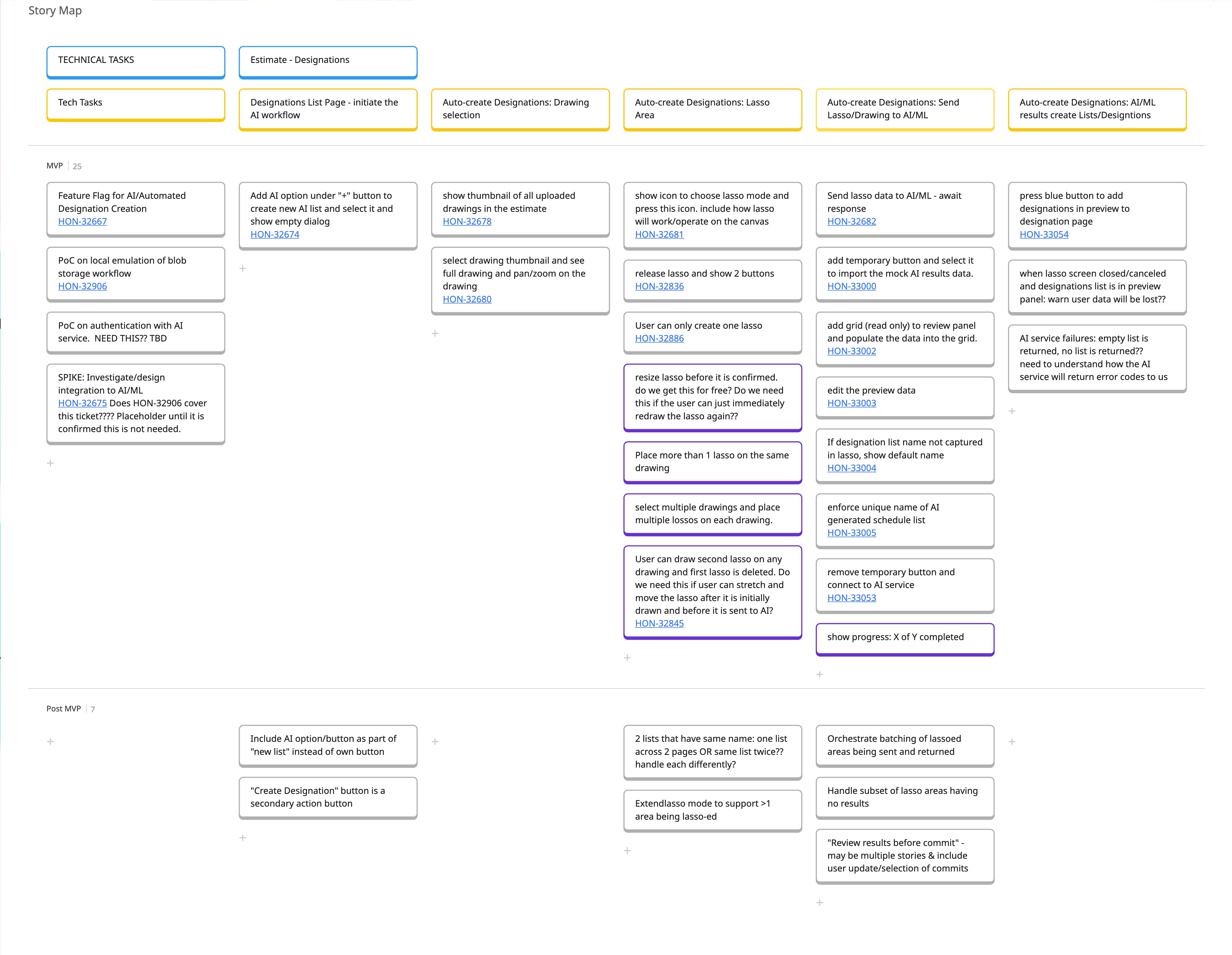
Problem
Creating the designation list structure and all of the individual designations within an estimate is currently a time consuming & manual task. It requires an estimator to manually transpose data from a PDF table into a list within an estimate before they can begin quantifying each designation. This process can be automated by having the estimator upload the PDF for the AI to interpret the information and provide the estimator a review for quality control of the results before they're finalized.
Approach
Our research defined the core technical and user-experience requirements for successfully extracting designation lists from project documentation:
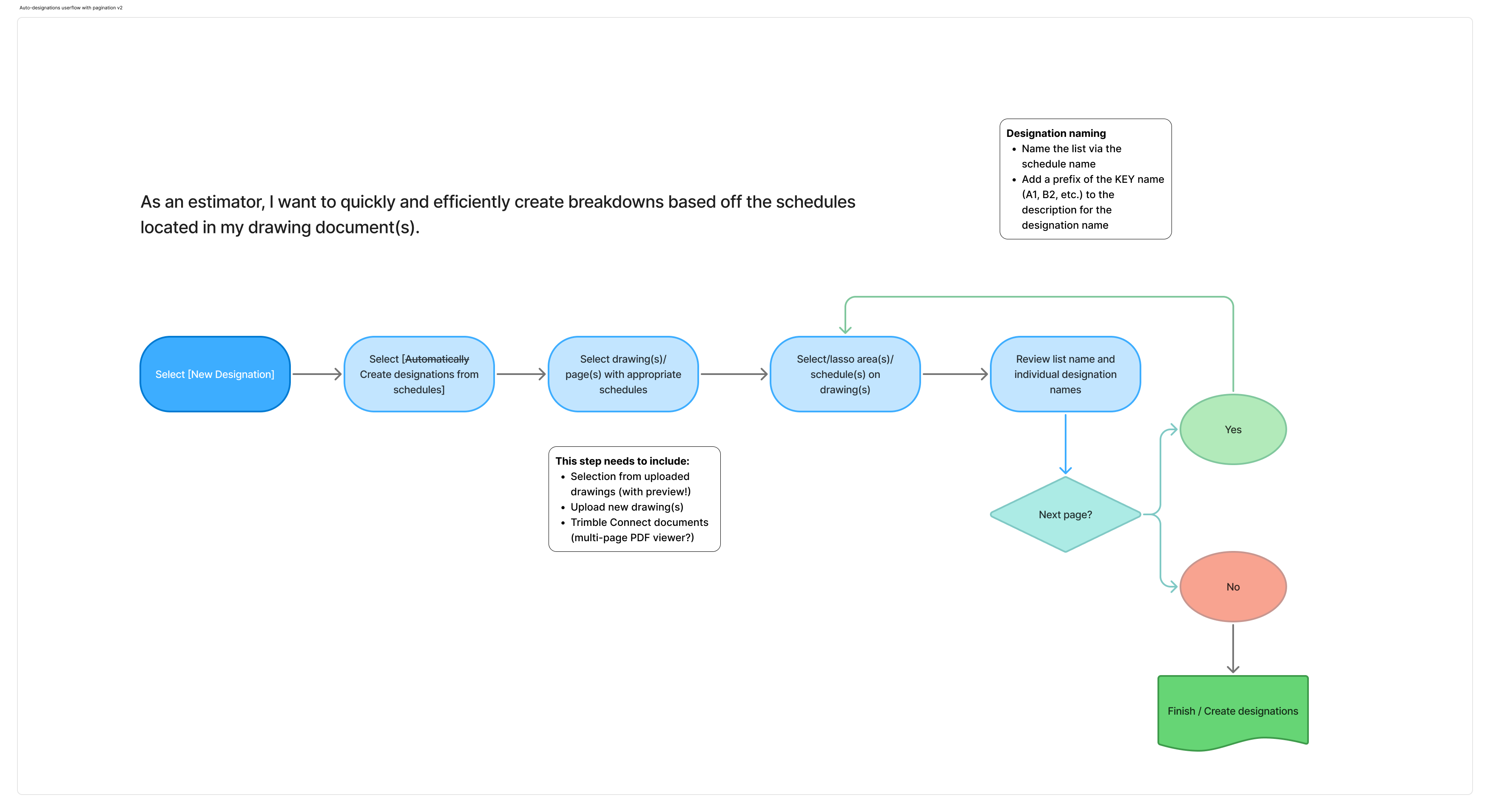
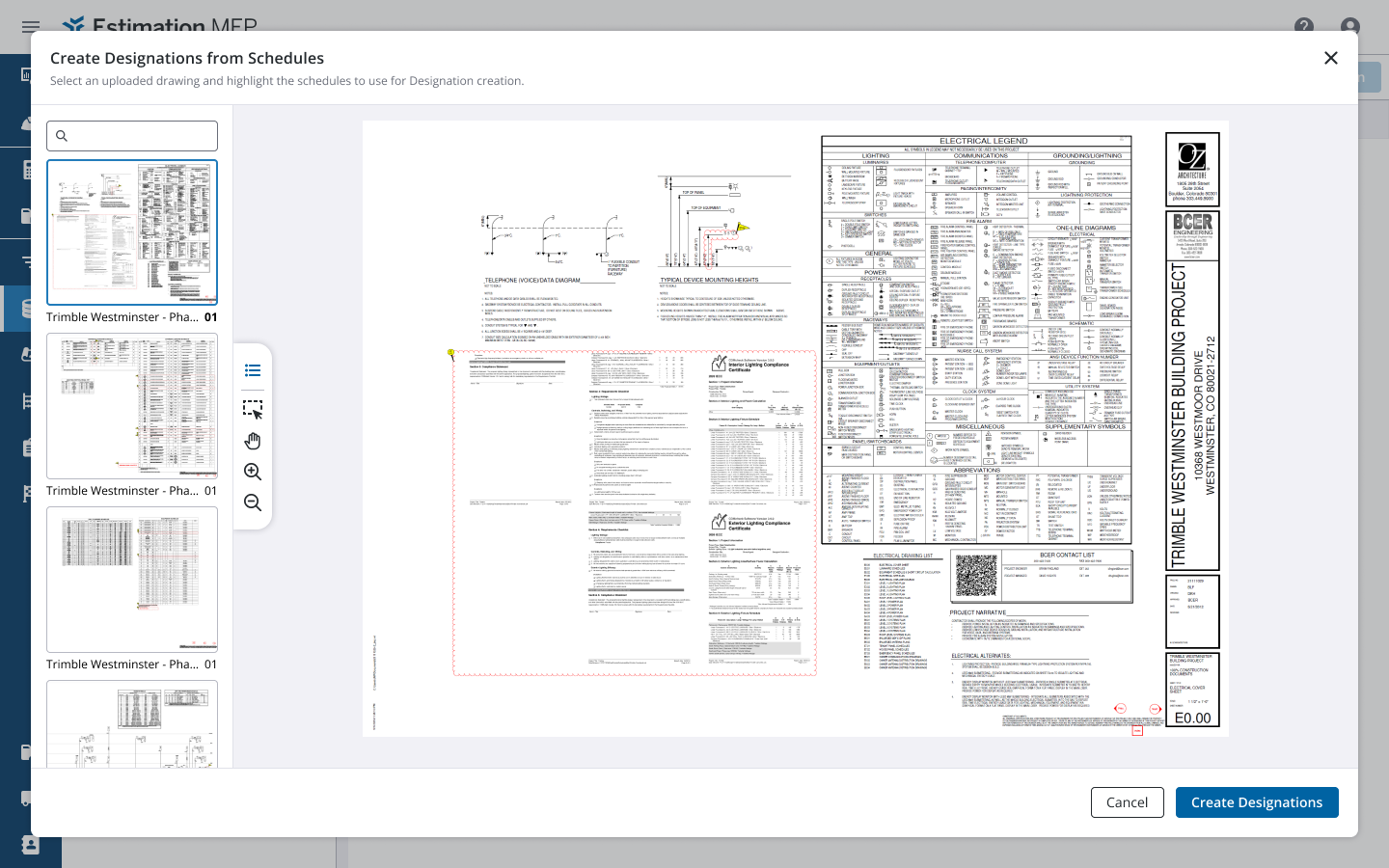
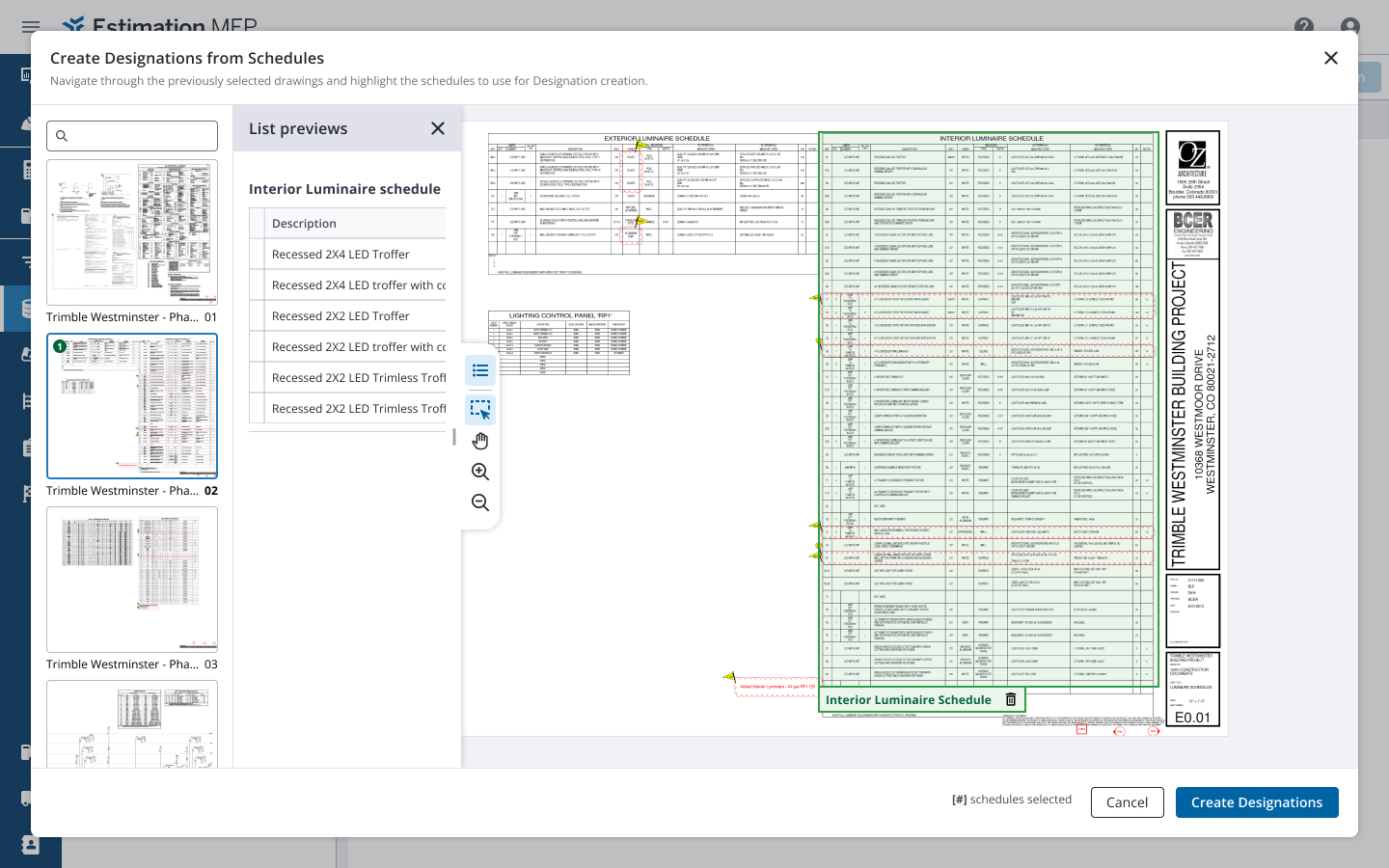
- Workflow Definition: We designed a modern, simple user flow to ensure the technology was approachable and integrated into the existing estimating process. The defined steps were: The user uploads project specification documents (PDFs). The user identifies and "lassos" the relevant designation schedule tables within the PDF. The AI system automatically processes and extracts the required data.
- AI Data Extraction: Research focused on the technical requirements for the AI to accurately interpret complex, non-standardized tabular data found in construction documents: Defining the mechanism for the AI to reliably extract the Table Name, the unique Tag/ID (which becomes the Designation Key), and the Description for each line item. Architectural validation to ensure the system could maintain a high degree of accuracy and correctly handle variations in table structure and layout across different project specifications.
- Review-Ready Output: The final phase of research was on the output, ensuring the AI's results were directly usable by the estimator. The system was designed to present a pre-populated, review-ready Designation List, immediately saving the estimator hours of manual data transposition and allowing them to move directly to the verification stage.
This approach was crucial in validating the feasibility of using advanced technology to solve one of the most time-consuming steps in pre-construction estimating.
Results
The Designations AI initiative successfully delivered a core capability that automates the creation of designation lists within an estimate from uploaded PDF schedules, turning a previously time-consuming manual task into a streamlined, high-precision process.
The fundamental achievement and primary result of this work was the implementation of a more robust and accurate data structure, driven by the AI:
- Explicit Data Separation (The "Key" Field): The AI is now engineered to parse and return two separate, distinct data points from project schedules: the unique Key/ID and the full Description. This involved implementing a new, explicit "Key" field for every designation, which had previously been combined with the Description.
- AI-Driven Precision: The AI's role is to populate this explicit "Key" field with the ID/Key from the schedule, eliminating the previous ambiguity of concatenating it into the Description field.
- Enhanced User Review: During AI-powered creation, the results preview now shows the explicit Key in its own column to the left of the Description. This ensures the estimator is reviewing and confirming accurate, distinct information before saving.
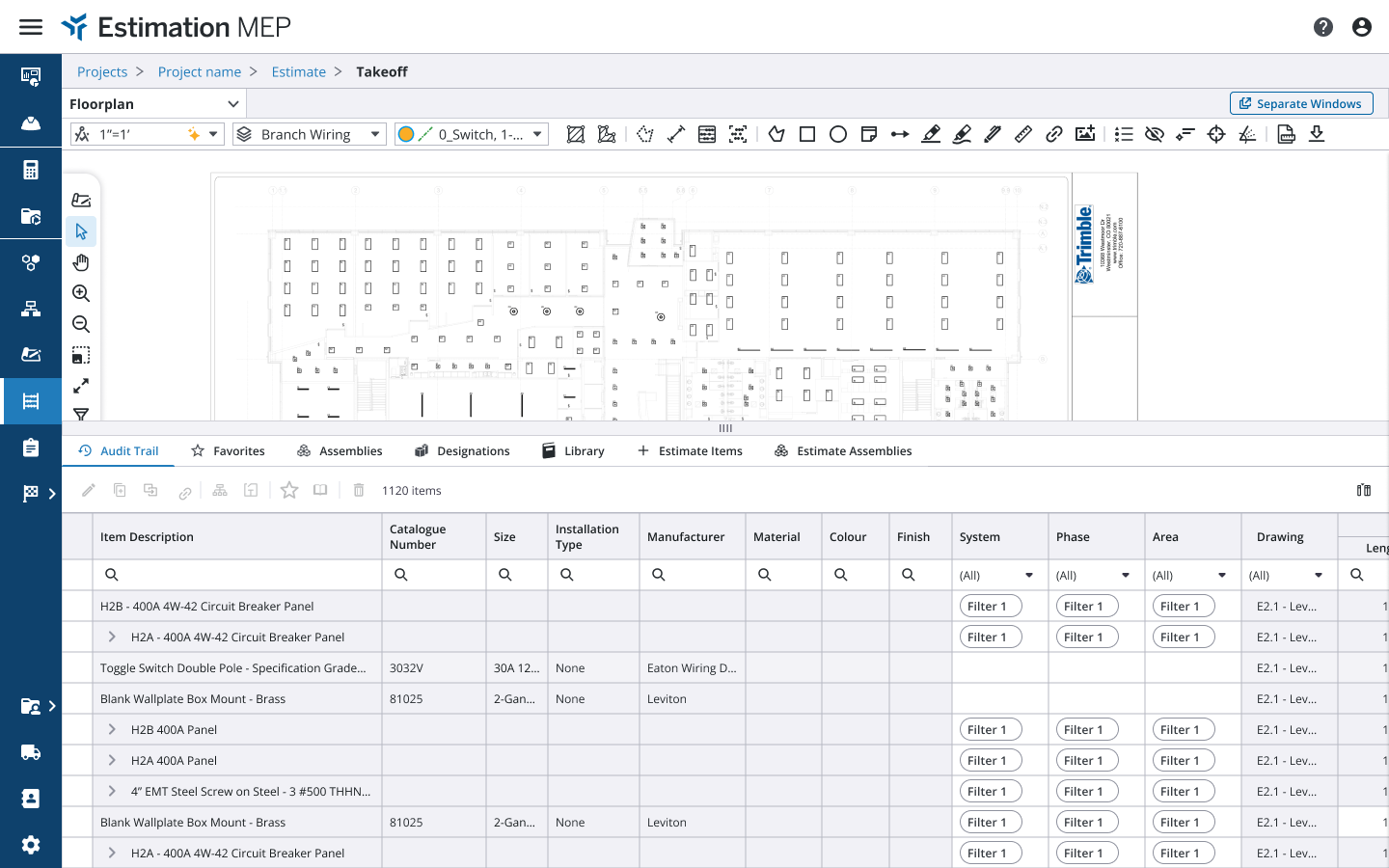
- Clearer Takeoff Data: The application leverages this separation to provide comprehensive context in the Takeoff screen. When a Designation is used in a Takeoff, the system concatenates the explicit Key and Description (e.g., "Designation Key – Designation Description") to form the final takeoff item description.